
Machine Shop Liquidation & Equipment Buyouts
If a machine shop or industrial operation is closing, downsizing, or upgrading equipment, we help owners convert machines, tooling, and shop assets into cash — efficiently and professionally.
FULLY LICENSED AND INSURED FOR COMMERCIAL
LIQUIDATION AND CLEANOUT PROJECTS

Hands-On Service


Experience

Liquidation Solutions

& BBB Accredited
A Practical, Experienced Approach to Machine Shop Liquidation
Machine shop liquidations require experience, planning, and careful handling of heavy equipment. We bring decades of hands-on liquidation and resale experience to help shop owners move forward with confidence.
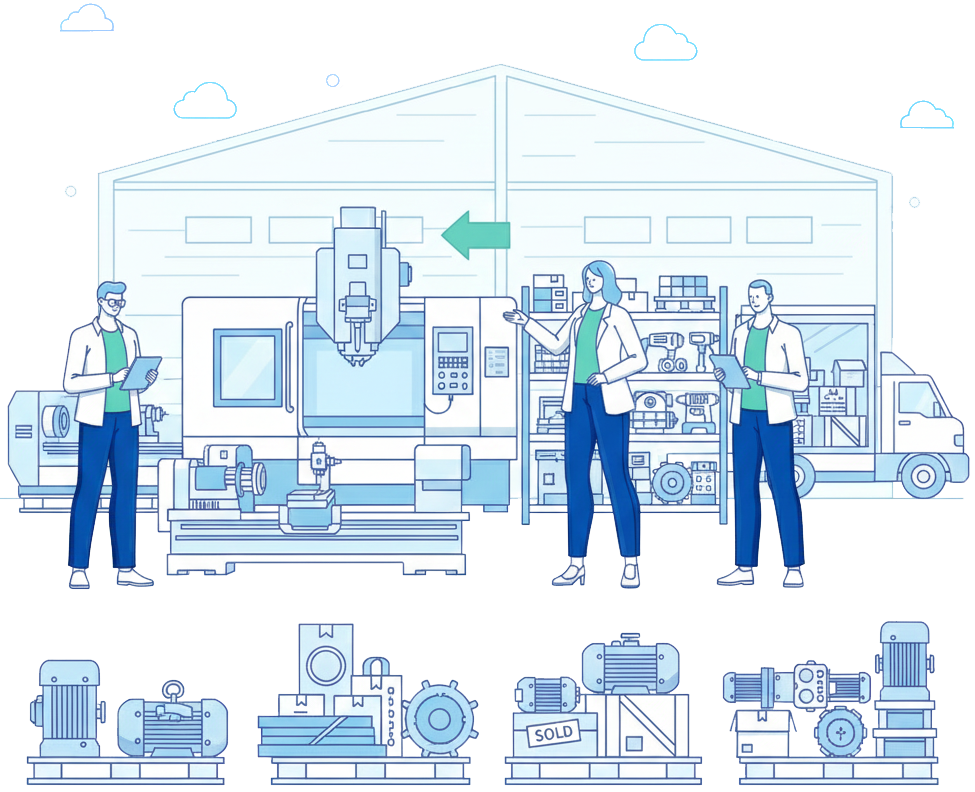
Machine shop and industrial assets we handle:
- CNC machines, lathes, mills, and machining centers
- Manual machines and specialty equipment
- Tooling, fixtures, and workholding
- Fabrication and welding equipment
- Industrial inventory and spare parts
- Pallet racking, shop infrastructure, and material handling equipment
Whether the goal is a fast cash buyout, a structured liquidation, or a complete cleanout, we tailor the approach to your equipment mix, timeline, and operational needs.
We provide flexible liquidation options.
We know how important it is to recover the best value from your unused industrial equipment, and we want you to get the best possible return. Our team reviews the items so we can provide competitive offers. Our goal is to turn your surplus items into the profit you need without the hassle.
Our liquidation options include:
- Direct Purchase: We offer immediate cash payments for your surplus items.
- Consignment Sales: We sell your items on your behalf and share the proceeds.
- Online Auctions: We facilitate auctions to reach a broader audience and achieve competitive prices.

Related Liquidation Services
Areas We Serve
Surplus Buyers provides office, equipment and business liquidation services throughout the San Francisco Bay Area including San Francisco, Redwood City, Palo Alto, Mountain View, Sunnyvale, San Mateo, San Jose, Fremont and Oakland.
HOW IT WORKS
3 STEP PROCESS
Free Consultation
Cash Offer or Consignment Plan
Removal, Sale & Final Cleanout



Machine Shops, Tools & Industrial Assets
frequently asked questions
What is electronic liquidation?
Electronics liquidation involves selling surplus, obsolete, or unused electronic equipment. Businesses often use electronic liquidation to recover value and free up space when upgrading technology, downsizing, or closing operations.
Why should my business consider liquidating electronics?
Liquidating electronics can help your business:
- Recover capital from unused assets: You can convert idle equipment into cash by liquidating unused electronics. For instance, selling outdated laptops and servers can free up funds to invest in new tech.
- Reduce storage and maintenance costs: Electronics are sensitive to environmental conditions, and temperature/humidity-controlled storage is at a premium. Liquidation frees up valuable storage space and can reduce management fees.
- Comply with environmental regulations: Professional liquidation services have the connections and knowledge to dispose of items responsibly. We dispose of electronic waste according to local, state, and federal regulations, avoiding potential compliance fines.
- Reduce the hassle of transitions during upgrades or closures: During upgrades, downsizes, and closures, liquidating your electronics makes the process easier. We work hard to make liquidating your assets go as smoothly as you hoped it would.
What types of electronics are typically liquidated?
Although it’s by no means an exhaustive list, commonly liquidated electronics include:
- Desktops, laptops, and servers
- Networking equipment like routers and switches
- Printers and copiers
- Mobile devices such as smartphones and tablets
- Audio/visual equipment
- Test and diagnostic tools
How does the electronics liquidation process work?
The process generally involves:
- Assessment: Evaluating the inventory to determine the value
- Data Security: Ensuring all data is securely wiped or destroyed
- Removal: Safely removing equipment from the premises
- Disposition: Reselling, recycling, or disposing of items responsibly
Can you handle confidential materials and electronics?
Yes, we ensure the secure handling and disposal of confidential materials and electronic devices, adhering to industry standards for data security and environmental compliance.